Ceremonial and Oversize Keys: Types, Materials and Uses
- Posted by Ceremonial Key Editorial Team
- First published
- In Ceremonial Keys
A ceremonial key is a symbolic key made to be given, held up or displayed, not to open a lock. Sizes run from handheld to oversize stage pieces, and materials range from metal to resin, wood, foam and cardboard. Choose by use: a keepsake to present, a prop to photograph or a display piece, then plan how it will be handled and kept.

A ceremonial key is an object that carries a gesture: welcome, thanks or hand-over. This guide covers the key as a thing you can pick up, make, give and keep. For the honor itself, see our key to the city guide. For what a city key stands for, what it means is the place to start.
Finding-aid note: the sources cited here were consulted on 2026-11-17 and set beside the statements above. Nothing here is for sale; no maker is ranked and no price is given.
What a ceremonial key is
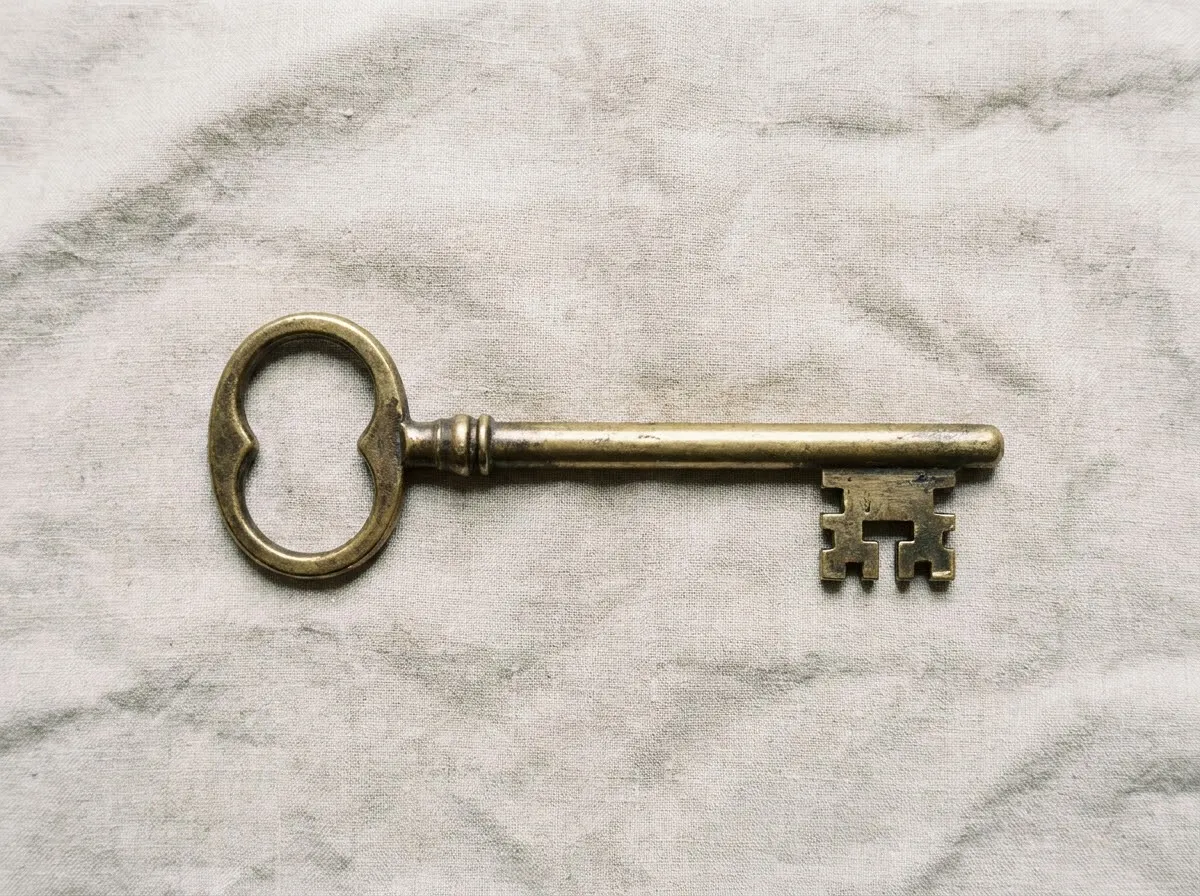
It is a symbolic key. Its job is to be seen and handed over. City honors use one, and so do openings, property hand-overs, anniversaries and stage events. It does not need to match a real lock, and none of the city policies we opened treats it as one. Doral’s policy says the key is “strictly honorary” and is designed to the mayor’s specifications, with the mayor’s name printed on it.
Standard-size and oversize keys
A standard-size ceremonial key can be held in one hand, suits a presentation box and sits on a shelf. An oversize key is made to read from across a room or in a photograph, and is usually carried with two hands or leaned on a stand. There is no official size; match it to the venue. A key for a council chamber can be modest. A key for an outdoor stage can be larger.
Materials and what they suit
| Material | Suits | Trade-offs |
|---|---|---|
| Cast or cut metal (brass and similar) | Keepsakes, honors | Heavy; tarnishes; needs careful cleaning |
| Resin or plastic with metallic finish | Photographs, mid-weight props | Finish can chip |
| Wood | Display, rustic themes | Heavier; check finish |
| Foam | Large props, one-time use | Light; easily dented |
| Cardboard | Cheap, quick props | Not durable; keep dry |
For the do-it-yourself route, see making one from cardboard or foam.
Where they appear
- Civic honors. A city presents a key as a symbol of welcome or thanks. How cities decide and who gives it explain the process.
- Openings and hand-overs. A host passes a symbolic key to a new occupant or partner.
- Stage props. Oversize keys are used for reveals and photographs.
- Anniversaries and welcomes. A group offers one to a guest of honor.
How a presentation unfolds is covered in the ceremony page.
Display and handling
For metal keys, handle with clean nitrile gloves. Conservation guidance says skin oils and salts can etch polished metal, and that harsh ammonia-based or acid-based cleaning compounds can leave pale green corrosion on copper alloys, so ask a conservator or the maker before using any polish. Do not carry a key by its bow if the bow is a thin or attached part; support from the base or shaft. On display, a padded stand or a case works; for wall mounting and case materials, our display guide covers the same principles, and the shovels guide covers companion objects.
Foam and cardboard keys need a different approach: keep them dry, out of strong sun and away from points that bend them. Store flat or standing with support.
Honors that use a key
The key to the city is the best-known. Others, such as proclamations and certificates, are documents, not objects. Civic honors compared lays them out side by side, and the presentation script tool helps you write the words that go with the handover.
Choosing a key: a checklist
- Who will carry it, and for how long?
- Where will it be seen: close, or from a distance?
- Is it a keepsake to keep, or a prop for one event?
- Do you need engraving or a plaque? Proof the text.
- How will it be stored afterwards?
- Which material suits the care you can give it?
Etiquette for presenting and receiving a key
The presenter should hold the key by the shaft or base, hand it over with both hands and wait for the recipient to take the weight. The recipient should take it with both hands, thank the presenter and hold it so the bow shows to the camera. If a certificate goes with it, hand that over second or place it on a table. Agree these moves in advance, because large keys are awkward and a rehearsal avoids a dropped object.
Common mistakes
- Choosing a key that is too heavy for the person who must hold it.
- Engraving or printing a name that has not been proofed.
- Leaving polished metal keys to be handled by many hands.
- Using a thin ribbon as the only support.
- Forgetting to decide who keeps the key afterwards.
Storage
Keep metal keys dry and clean, wrapped in soft material and away from fumes. Keep foam and cardboard keys flat or supported, away from damp and heat. Label the object with the date and occasion so the record survives.
All Ceremonial Keys guides
- How to Make a Giant Ceremonial Key from Cardboard or Foam
How to make a giant ceremonial key from cardboard or foam: materials, sizing, cutting, layering, finishes, safe tool use and presentation tips.
Answers to common questions
What is a ceremonial key?
A ceremonial key is a symbolic key used to honor, welcome or hand over something, such as a city honor, a building opening or a project handover. It is made to be presented and kept, and it does not operate a lock. Some are decorative copies of historic keys, and others are oversize props built for stage and photographs.
How big is a giant ceremonial key?
There is no standard size, and we found no source that sets one. Oversize keys range from slightly larger than a hand to several feet long for a stage. Choose by who will carry it and where it will be seen: a key that must be held up for a photograph should be light enough for one person to hold steadily.
What are they made of?
Common materials are cast or cut metal such as brass, resin or plastic with a metallic finish, wood, foam and cardboard. Metal feels weighty and lasts, but needs care against tarnish. Foam and cardboard are light, cheap and easy to shape, and suit one-time props. Ask any maker for the base material and finish in writing.
Can a ceremonial key open a lock?
Usually not. A city key such as Doral's is described as strictly honorary, and decorative keys are made as objects, not mechanisms. If you want a key that really works, say so to the maker, and expect a different, more practical object. For a ceremony, a symbolic key with an unlocked or opening gesture is more reliable.
Where are oversize keys used?
They appear at civic honors, building openings, handovers of a property or project, anniversaries and stage events. At those moments the key stands for welcome, trust or completion. Cities present keys to guests; developers or hosts may hand a symbolic key to a new owner. The object makes the gesture visible from a distance.
Further reading
- City of Doral: Key to the City, Proclamation and Certificates Policy and Procedure (revised 12/18/2024) (cityofdoral.com)
- Canadian Conservation Institute: Caring for metal objects (preventive conservation guidelines) (canada.ca)
- Canadian Conservation Institute: Handling heritage objects (canada.ca)
- CCI Note 9/3: The Cleaning, Polishing and Protective Waxing of Brass and Copper (canada.ca)
Related reading
- How to Make a Giant Ceremonial Key from Cardboard or Foam
How to make a giant ceremonial key from cardboard or foam: materials, sizing, cutting, layering, finishes, safe tool use and presentation tips.